Algorithmic Trading in 2026: The Complete Guide for Retail Traders
PineForge Team
Automated Trading Platform
You're staring at charts for six hours. You spot the perfect setup. Your finger hovers over the buy button — and you hesitate. The price moves. The opportunity vanishes.
This is the reality of manual trading. And it's exactly why algorithmic trading has taken over the financial markets. Over 70% of all trades on major exchanges are now executed by algorithms — programs that don't hesitate, don't get tired, and don't let fear dictate their decisions.
The good news? Algorithmic trading isn't reserved for hedge funds anymore. Platforms like PineForge are putting the same power in the hands of retail traders. Here's everything you need to know.
What Is Algorithmic Trading and How Does It Work?
Algorithmic trading — or algo trading — uses computer programs to execute trades based on predefined rules. These rules can be as simple as "buy when the 10-period EMA crosses above the 21-period EMA" or as complex as multi-factor models analyzing dozens of signals simultaneously.
The key difference from manual trading: the rules are set before the market opens. Once defined, the algorithm follows them exactly — no second-guessing, no emotional overrides.
The Core Components
Every algorithmic trading system has three parts:
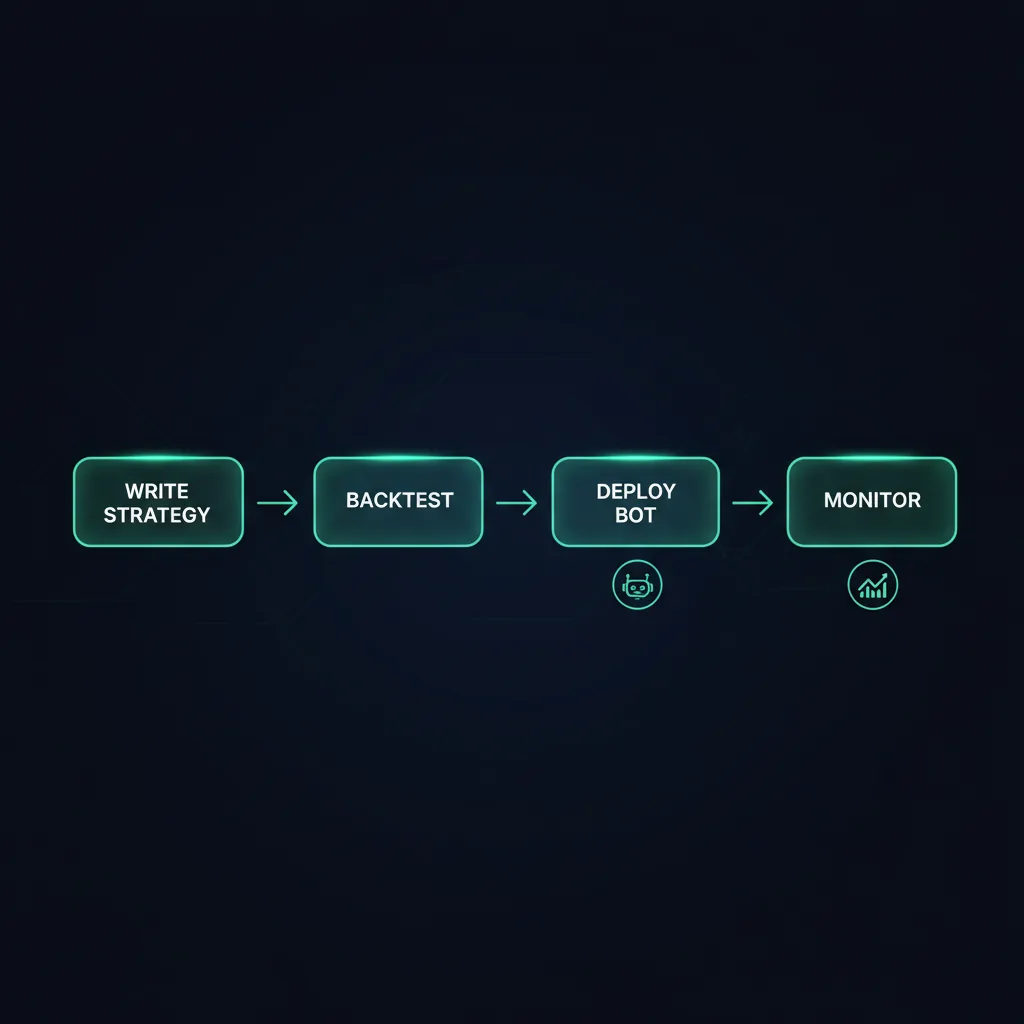
With PineForge, you write the strategy in Pine Script, backtest it on historical data, and deploy it as a live trading bot connected to your MT5 account.
Why Are 70% of Trades Now Algorithmic?
The shift to algorithmic trading isn't a trend — it's a structural change in how markets operate.
Speed That Humans Can't Match
Algorithms react to market signals in milliseconds. By the time you see a setup, process it, and click a button, the opportunity may have already passed. In forex and gold markets where prices move fast, this speed advantage is enormous.
Discipline That Doesn't Waver
The number one killer of trading accounts? Emotion. Fear makes you exit too early. Greed makes you hold too long. FOMO makes you chase bad entries. Algorithms don't feel any of this. They execute your rules exactly as designed, every single time.
24/7 Market Coverage
Forex markets run 24 hours a day, 5 days a week. Crypto never closes. No human can monitor XAUUSD, EURUSD, and BTCUSD simultaneously around the clock. But a trading bot can — and it does.
How Do Retail Traders Get Started with Algorithmic Trading?
You don't need a computer science degree. You don't need to build infrastructure. Here's the modern path:
Step 1: Learn the Basics of Strategy Development
Start with simple strategies. An EMA crossover or RSI mean reversion strategy is enough to begin. Complexity doesn't equal profitability — some of the most robust strategies use only 2-3 indicators.
Step 2: Backtest Before You Risk Real Money
This is non-negotiable. Every strategy must be backtested on historical data before going live. PineForge lets you backtest on up to 5 years of data across forex, gold, crypto, and indices — with results in seconds.
One PineForge user backtested an EMA crossover strategy on XAUUSD and found a 74.2% win rate with a 2.31 profit factor over 156 trades. That confidence comes from data, not gut feeling.
Step 3: Deploy and Monitor
Once your backtest looks solid, deploy it as a live bot. PineForge handles the infrastructure — cloud servers, broker connectivity, automatic reconnection, and real-time monitoring. You focus on strategy. The bot handles execution.
What Are the Best Markets for Algorithmic Trading?
Not all markets are equal for algo trading.
Gold (XAUUSD) — Strong trends, high volatility, excellent for trend-following algorithms. See our gold trading strategies guide.
Forex majors (EURUSD, GBPUSD) — Tight spreads, high liquidity, 24/5 availability. Ideal for scalping and swing strategies.
Crypto (BTCUSD, ETHUSD) — 24/7 markets with high volatility. Perfect for bots that need to run continuously. Learn more in our forex vs crypto comparison.
Indices (US500, USTEC) — Strong momentum characteristics, good for trend and breakout strategies.
Common Misconceptions About Algorithmic Trading
"It's Only for Institutions"
Not anymore. PineForge users run bots on accounts as small as $500. Usage-based pricing means you pay only for what you use — no monthly subscriptions locking you in.
"You Need to Be a Programmer"
Pine Script is the most beginner-friendly strategy language in trading. If you can write "if RSI < 30, buy" — you can write a Pine Script strategy. Our beginner's guide gets you writing strategies in 10 minutes.
"Bots Are Set-and-Forget"
The best traders treat bots like employees. They need supervision, performance reviews, and occasional adjustments. PineForge provides real-time logs, trade history, and email alerts so you stay informed without watching charts all day.
Take the First Step
Algorithmic trading isn't the future — it's the present. And the gap between traders who automate and those who don't is widening every day.
You bring the strategy. The bot brings the discipline. Sign up for PineForge and deploy your first trading bot in under 5 minutes.
Start Trading Smarter
Build, backtest, and deploy your strategies with PineForge. No coding experience required.